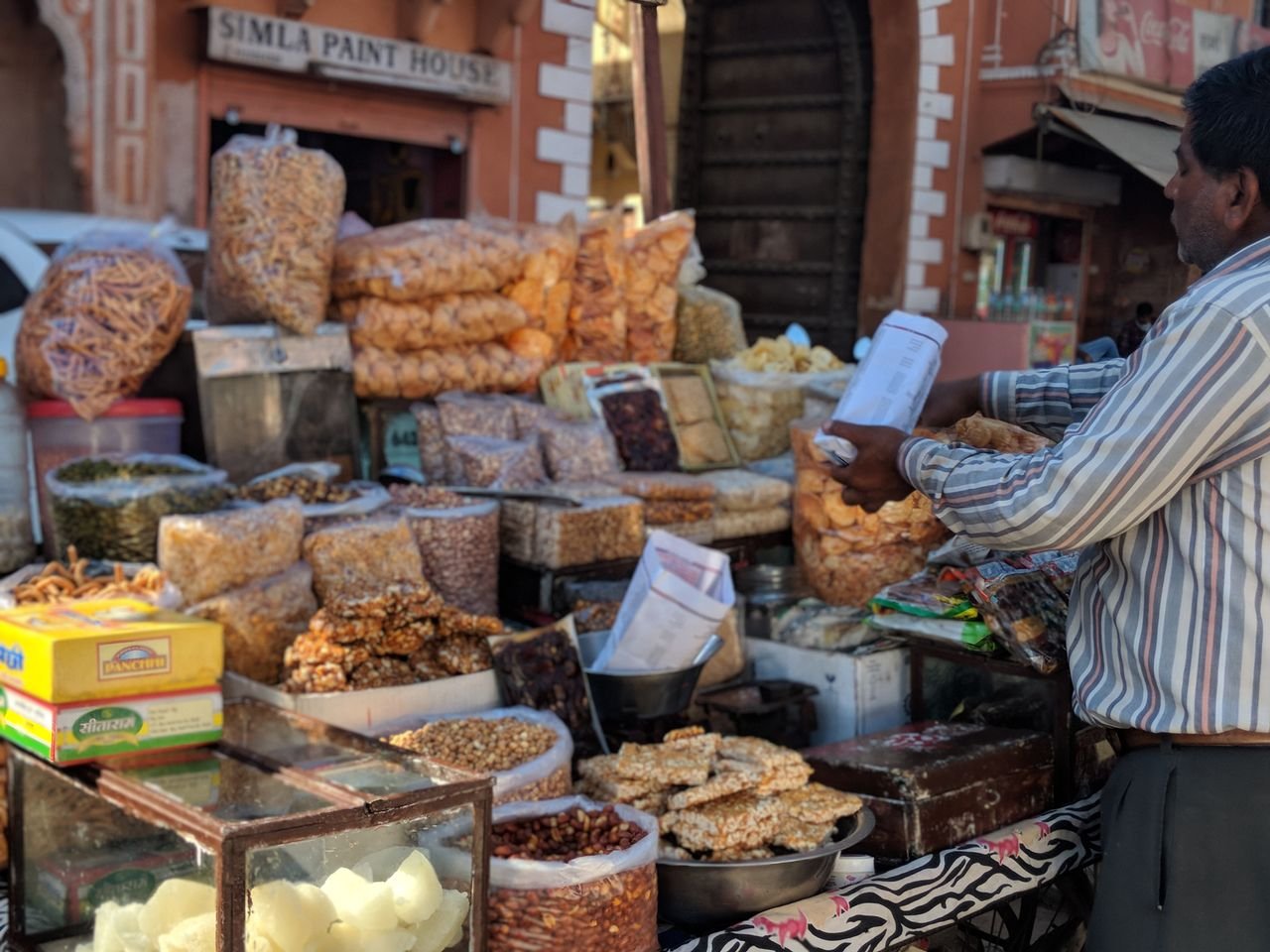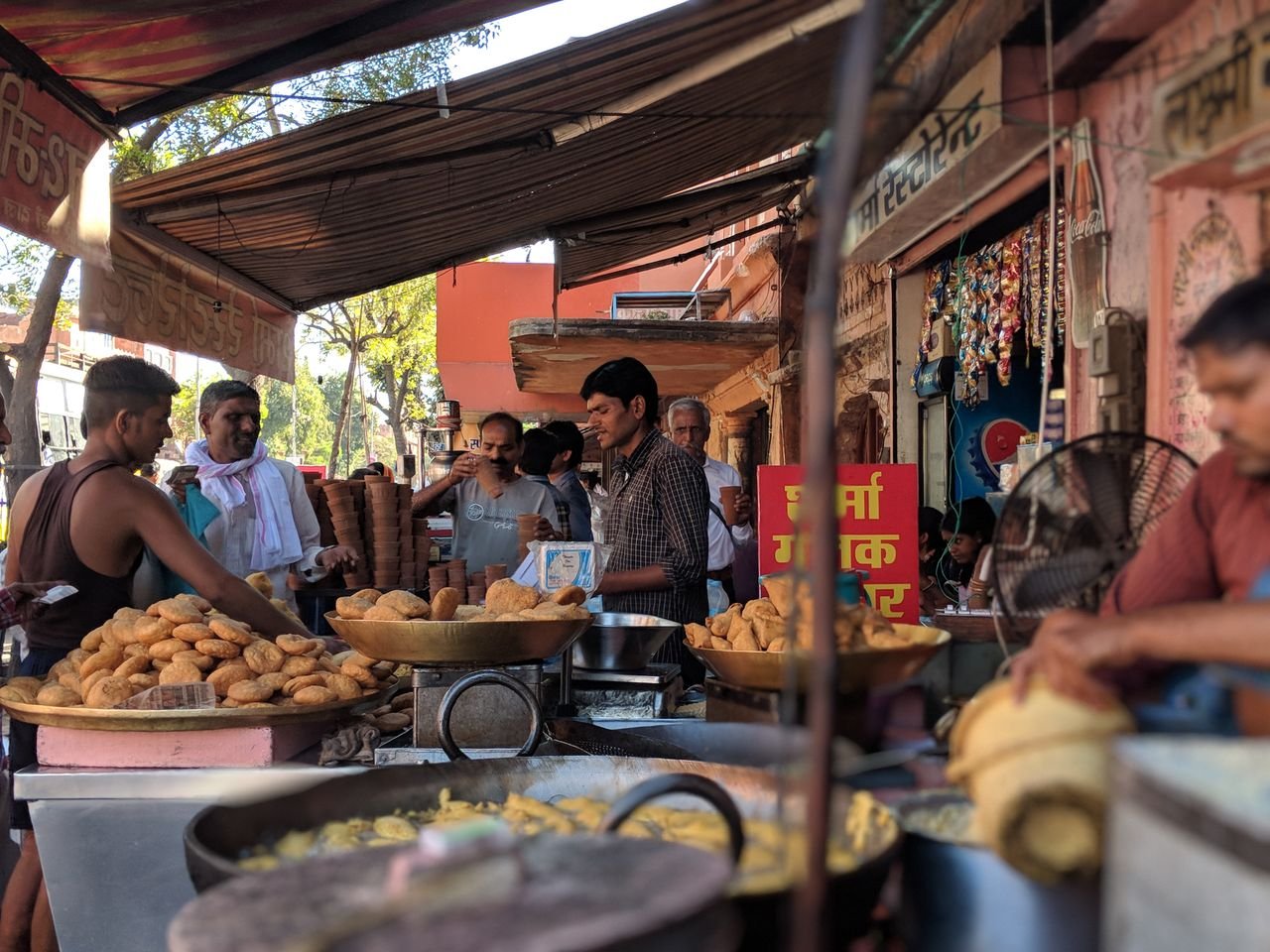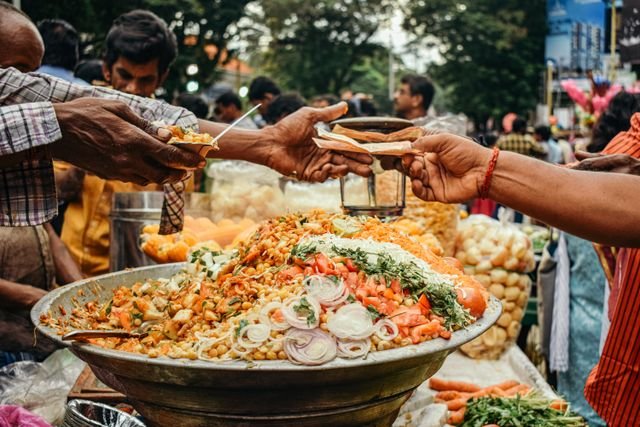
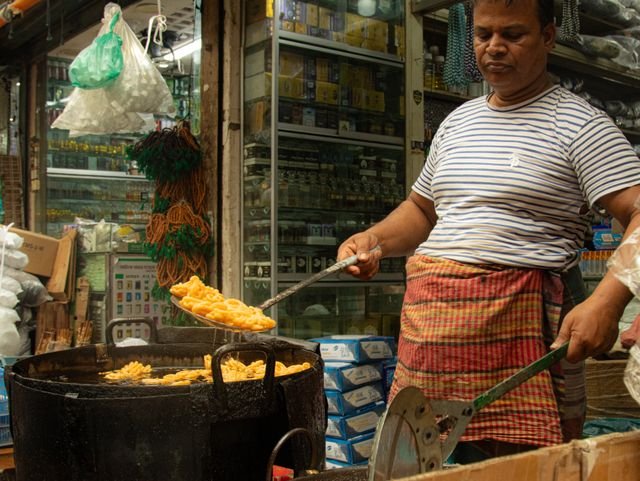
Jaipur is celebrated for its forts and palaces, but the city’s food is equally memorable. Its historic markets are filled with traditional snack shops, sweet makers, tea stalls and family-run establishments serving recipes developed over generations.
The best street food in Jaipur ranges from crisp pyaaz kachori and colourful chaat to creamy lassi and traditional Rajasthani sweets. Many dishes are vegetarian, making the Pink City particularly appealing to travellers who want to experience Indian food without meat.
Visitors who would prefer help choosing dishes and navigating the Old City can join our Private Jaipur Street Food Tour with Local Guide. The private experience includes scheduled food and non-alcoholic drink tastings, with an optional hotel-transfer upgrade.
What Food Is Jaipur Famous For?
Jaipur is famous for Rajasthani snacks, sweets and rich regional dishes. Local food often combines spicy, tangy, sweet and savoury flavours within the same meal or tasting experience.
Some dishes are strongly associated with Jaipur, while others are popular across Rajasthan and northern India. Recipes, spice levels and accompaniments can differ between individual shops.
Here are some of the most popular foods visitors may encounter in Jaipur.
1. Pyaaz Kachori
Pyaaz kachori is one of Jaipur’s most recognisable snacks. It consists of a crisp, deep-fried pastry filled with a spiced onion mixture.
It may be served with tamarind chutney, coriander chutney or a potato preparation. The crisp exterior and strongly flavoured filling make it a popular breakfast or afternoon snack.
Because it can be rich and spicy, first-time visitors may prefer to share one before ordering a larger portion.
2. Dal Kachori
Dal kachori uses a seasoned lentil filling instead of onion. The filling is generally dry, aromatic and enclosed in flaky fried pastry.
Although pyaaz kachori receives more attention from visitors, dal kachori offers a different texture and flavour. Availability depends on the individual shop and time of day.
3. Samosa
Samosas are found throughout India, but Jaipur’s local shops give this familiar snack their own character. A traditional version usually contains a spiced potato filling inside a crisp triangular pastry.
Samosas may be accompanied by sweet tamarind chutney or a sharper green chutney. They are best enjoyed freshly prepared and hot.
4. Jaipur Chaat
Chaat is not a single dish. It is a broad family of snacks that combines contrasting flavours and textures.
Depending on the preparation, chaat can contain crisp pastry, potatoes, chickpeas, yoghurt, spices, herbs and sweet or tangy chutneys. Each vendor may use a slightly different recipe.
Visitors who prefer less heat should tell the vendor or guide before the final spices and chutneys are added.
5. Mirchi Vada
Mirchi vada is made with a large chilli that is filled, coated in gram-flour batter and fried. Despite its appearance, the chilli used may sometimes be milder than expected—but spice levels vary considerably.
Travellers who are sensitive to spicy food should ask before tasting it. Sharing a portion can be a sensible introduction.
6. Lassi
Lassi is a yoghurt-based drink enjoyed across northern India. Jaipur serves sweet, thick versions that can provide a refreshing contrast to fried or spicy snacks.
Some preparations may contain sugar, cream or additional flavourings. Travellers avoiding dairy should remember that traditional lassi is not vegan.
7. Kulfi
Kulfi is a dense frozen dairy dessert traditionally prepared by slowly reducing milk. It may be flavoured with cardamom, saffron, pistachio or other ingredients.
Unlike conventional ice cream, kulfi has a compact, creamy texture. It can be especially enjoyable after spicy food during Jaipur’s warmer months.
8. Ghevar
Ghevar is a disc-shaped Rajasthani sweet with a porous, honeycomb-like structure. It may be served plain or topped with syrup, nuts, rabri or other rich ingredients.
It is particularly associated with festivals and the monsoon season, although some sweet shops sell it at other times of year. Availability and preparation vary seasonally.
9. Rabri
Rabri is a rich sweet made by slowly reducing milk until it becomes thick and layered. Sugar and aromatic ingredients are then added.
It may be eaten independently or served with other desserts. Because it is rich, a small tasting is often sufficient during a food walk.
10. Masala Chai
Masala chai is prepared by brewing tea with milk, sugar and spices. The exact mixture differs between tea sellers and may include ginger, cardamom, cloves or cinnamon.
Stopping for chai also provides a glimpse into everyday Jaipur life. It is as much a social ritual as it is a drink.
Is Jaipur Street Food Vegetarian?
A large proportion of Jaipur’s traditional street food is vegetarian. Kachori, samosa, many forms of chaat and numerous sweets are normally prepared without meat.
However, vegetarian food may still contain dairy products such as milk, yoghurt, butter or ghee. Vegan travellers should explain their requirements clearly before ordering.
People with serious allergies or strict dietary restrictions should be cautious. Small food shops may prepare several dishes in shared cooking and serving areas, making complete separation difficult to guarantee.
How Spicy Is Jaipur Street Food?
Jaipur street food ranges from mild sweets and dairy drinks to intensely seasoned savoury snacks. Spice levels depend on the dish, vendor and toppings.
To manage the heat:
-
Ask for less chilli before the dish is assembled
-
Request spicy chutney separately
-
Begin with smaller portions
-
Alternate spicy snacks with milder dishes
-
Keep drinking water available
-
Tell your guide about your preferences at the beginning
“Not spicy” can be interpreted differently by different people, so explain your tolerance clearly.
What Is the Best Time for a Jaipur Food Walk?
Evening is generally a convenient time for a Jaipur street food experience. Markets become lively, vendors begin preparing popular snacks and temperatures can be more comfortable than during the afternoon.
An evening food walk also fits easily after a day of sightseeing. Visitors can explore Jaipur’s monuments during the day and experience the city’s markets and food culture later.
Opening hours and vendor availability may change on festivals, holidays and special occasions.
How Can International Travellers Explore Jaipur Street Food?
International visitors can explore independently, but a guided experience removes several common difficulties. A guide can explain unfamiliar dishes, communicate spice preferences, manage scheduled tastings and plan a practical route through the Old City.
A private format is particularly useful for couples, families and groups who want to move at their own pace.
Our private Jaipur food walking tour lasts approximately 2.5–3 hours and includes scheduled food and non-alcoholic drink tastings. Guests can meet the guide in the Old City or select the premium option with private hotel pickup and drop-off.
Practical Food-Safety Tips
Eating street food always carries some risk, so travellers should make sensible decisions.
Consider these precautions:
-
Prefer food prepared fresh and served hot
-
Drink sealed or provided water
-
Clean your hands before eating
-
Avoid consuming too much at the first stop
-
Inform the guide about allergies
-
Be cautious with uncooked ingredients
-
Do not join when experiencing an upset stomach
No operator or vendor can promise that street food is completely risk-free. Travellers with serious medical allergies should discuss their needs before booking.
Frequently Asked Questions
What is the most famous street food in Jaipur?
Pyaaz kachori is among Jaipur’s best-known street foods. Chaat, samosa, lassi, ghevar and traditional Rajasthani sweets are also popular with visitors.
Where can tourists find street food in Jaipur?
Many traditional food shops and market stalls are located in and around Jaipur’s Old City. A guided tour helps visitors follow an efficient route and understand what they are tasting.
Is Jaipur street food suitable for vegetarians?
Yes. Many famous Jaipur snacks and sweets are vegetarian. Vegan travellers should check for milk, yoghurt, butter and ghee.
Is Jaipur street food very spicy?
Some dishes can be spicy, while sweets, lassi and several snacks are mild. Ask for reduced chilli or have spicy chutneys served separately whenever possible.
How long does a Jaipur food tour take?
A guided food walk normally lasts around two to three hours. Safari Rajasthan’s private tour lasts approximately 2.5–3 hours, excluding additional transfer time where applicable.
Are food tastings included in the guided tour?
All scheduled food and non-alcoholic drink tastings are included in Safari Rajasthan’s two private booking options. Extra personal orders are not included.
Is hotel pickup available?
Yes. Hotel pickup and drop-off within Jaipur city limits are available when the private tour with hotel transfers is selected. The standard option begins at a confirmed meeting point.
Can families with children join?
Yes. Families can book the private experience, but parents should provide advance information about allergies, dietary restrictions and children’s spice preferences.
Experience Jaipur Through Its Food
Trying local food is one of the most enjoyable ways to understand Jaipur’s culture. Every market lane, snack shop and sweet counter reveals something about the city’s history and everyday traditions.
Rather than choosing dishes alone, explore exclusively with your own group and a local guide. Compare both private options and book your Jaipur Street Food Tour.