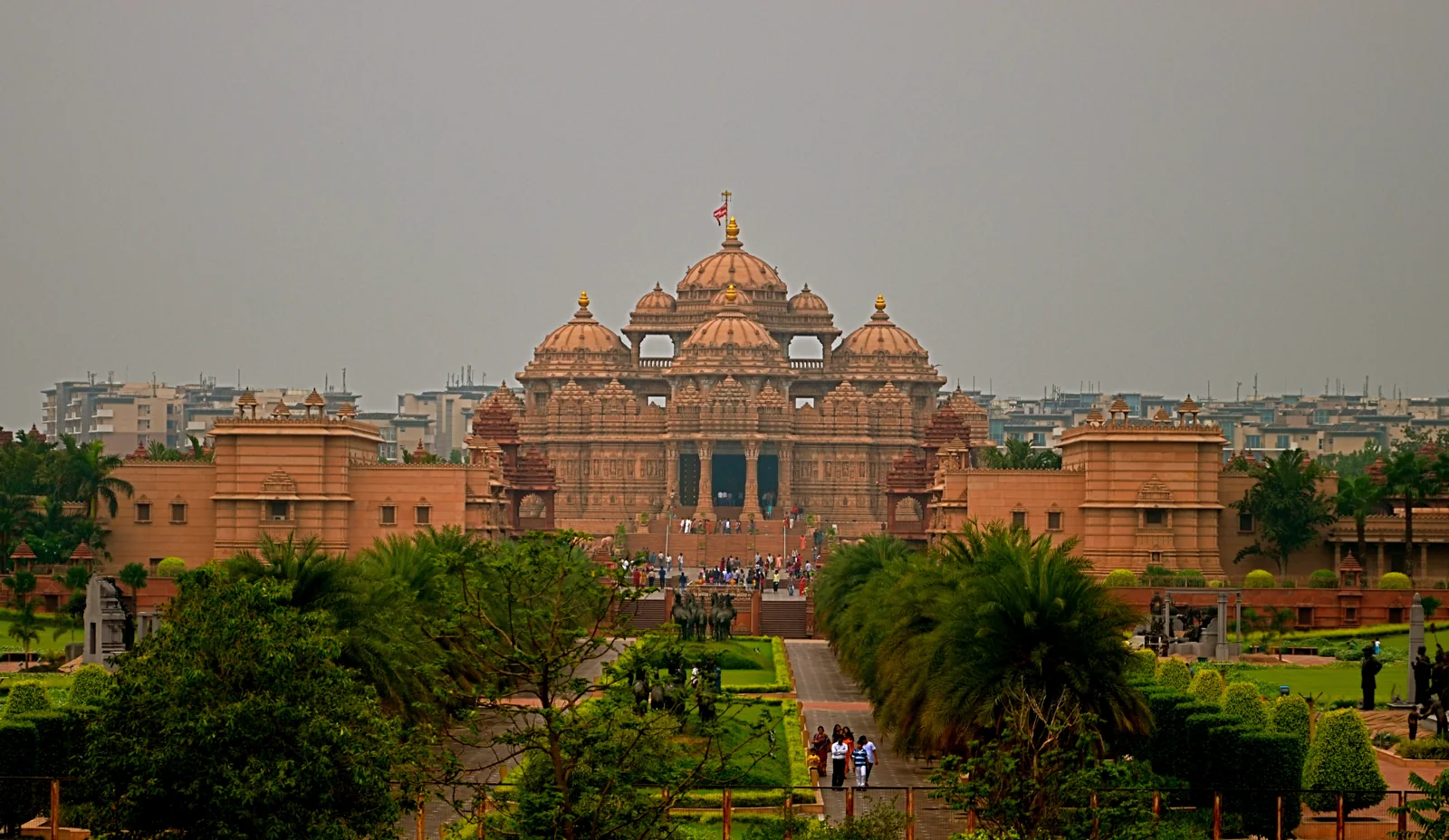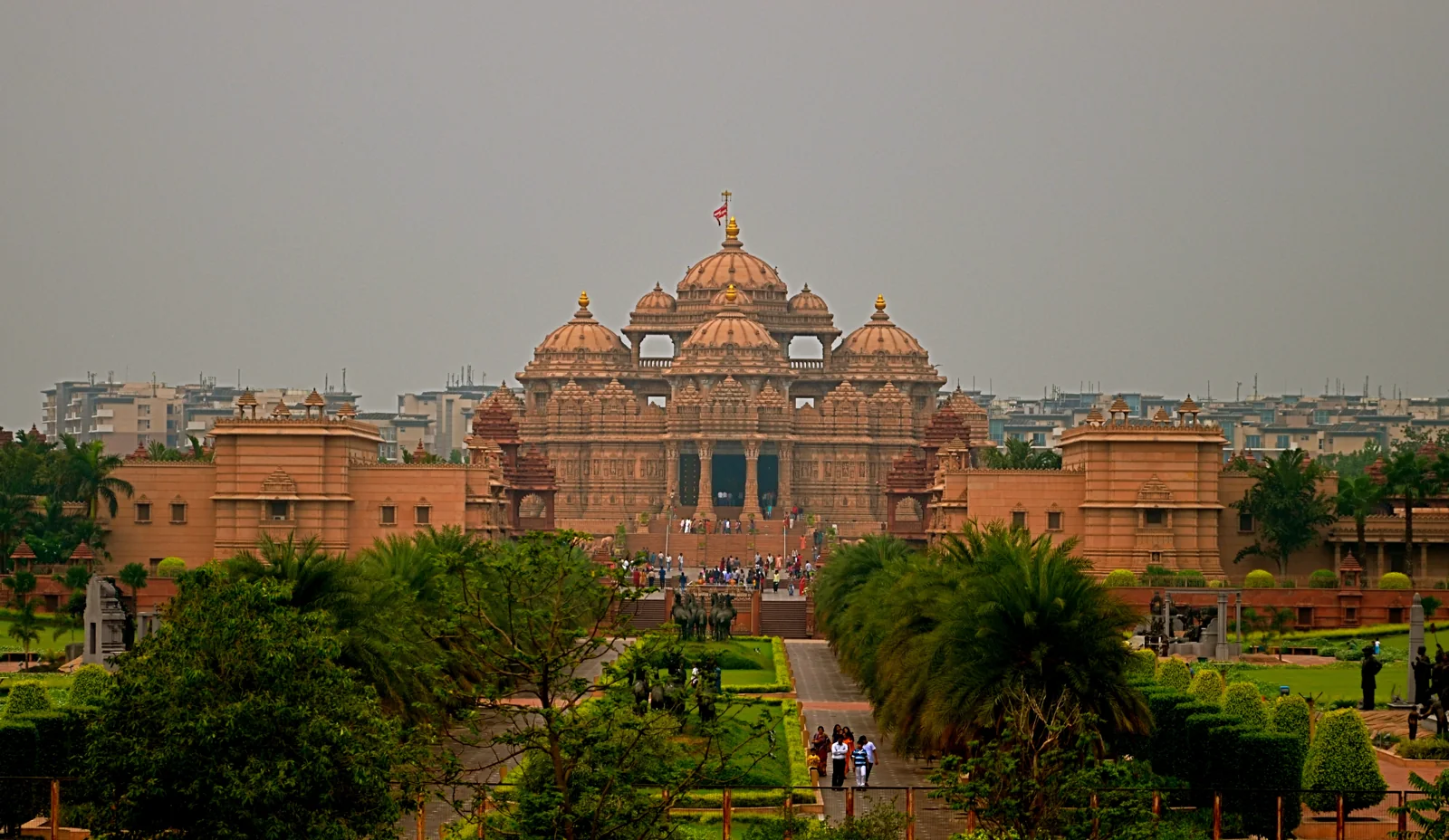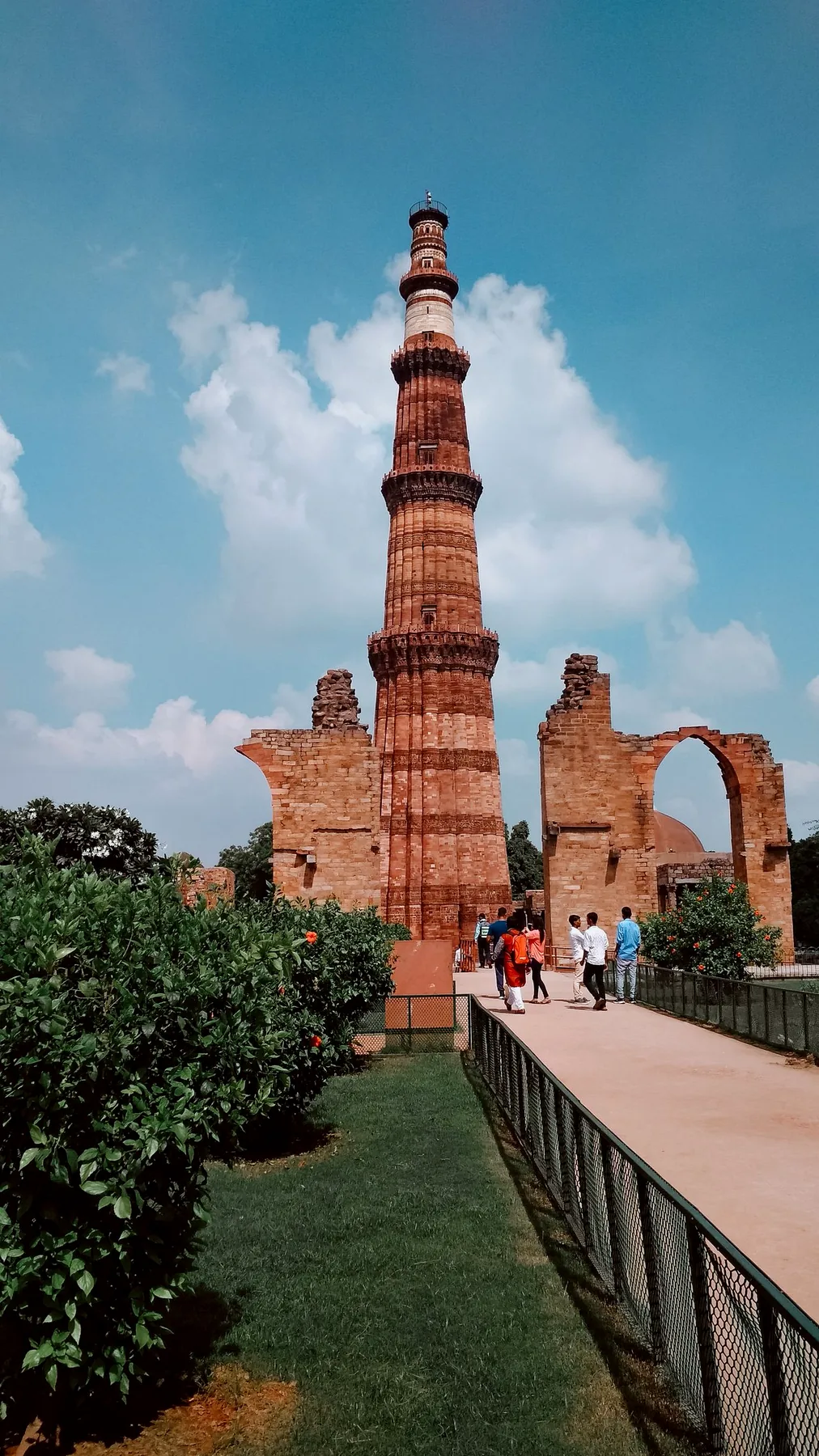
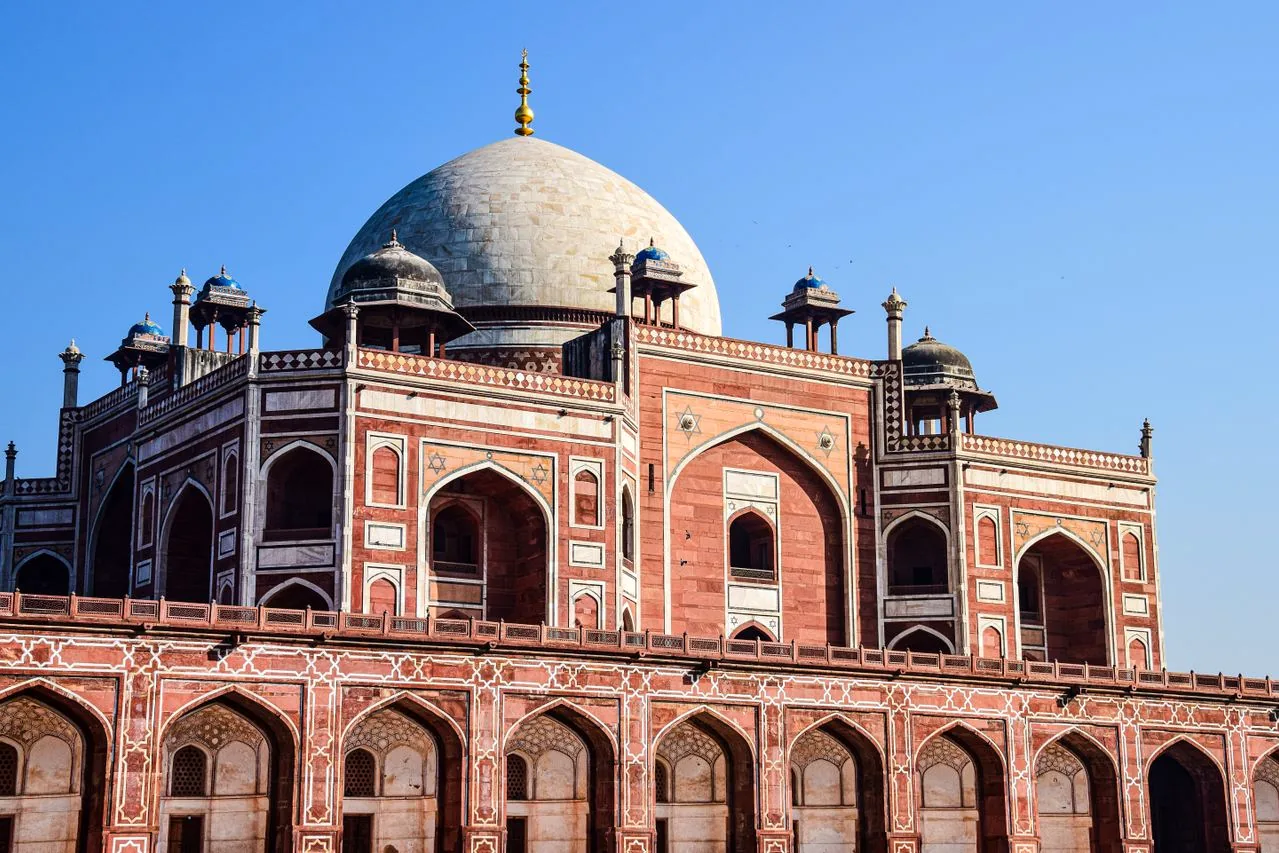
Humayun’s Tomb and Qutub Minar offer different views of Delhi’s architectural history. Humayun’s Tomb is a Mughal garden-mausoleum organised around a monumental tomb. Qutub Minar is the best-known landmark within a larger medieval archaeological complex. Visit both if you want to compare designed garden space with a site containing several building types and historical layers.
The private Humayun’s Tomb and Qutub Minar heritage tour focuses on these two places over approximately 5–6 hours, with a guide and car transfers. It is more useful for this comparison than adding several unrelated city attractions to the same short outing.
The main differences at a glance
| Question | Humayun’s Tomb | Qutub Minar complex |
|---|---|---|
| Architectural focus | Mughal garden-tomb and mausoleum | Minaret and surrounding monuments |
| Broad historical setting | Sixteenth-century Mughal Delhi | Earlier Delhi Sultanate period and later additions |
| What to look for | Garden axes, dome and overall symmetry | Tower details, gateways and contrasting structures |
| Good approach | Read the building and landscape together | Explore the ensemble beyond the tower |
| Tour admission | Paid separately | Paid separately |
Humayun’s Tomb: understand the relationship with the garden
UNESCO’s Humayun’s Tomb entry identifies the site as an important garden-tomb completed in 1570 and an influence on later Mughal architecture. Its four-part garden, monumental terrace and domed building help explain why the landscape belongs to the architectural experience.
Begin with the whole composition. Look along a main path towards the building before concentrating on a single detail. Then compare a wide view with a closer one: how do the gateway, open space and elevated structure change your sense of scale? This simple observation exercise gives the guide’s explanation a visible reference point.
Ask why the building was placed within a planned landscape and how its use shaped the design. You do not need a catalogue of every decorative term. Understanding one or two relationships often makes the visit more memorable than collecting names without context.
Qutub Minar: look beyond the obvious landmark
UNESCO describes Qutb Minar and its surrounding monuments as a connected ensemble. The 72.5-metre tower is the visual anchor, but the mosque remains, gateways, tombs and Iron Pillar give a broader picture of the site.
Pause to compare the tower with structures closer to human scale. Notice how different forms occupy the same visit: a vertical landmark, passages, courtyards and architectural fragments. Ask your guide to distinguish original purposes from later changes, and to explain which observations are established history rather than a popular story.
The visit is at ground level; this tour does not include climbing the minaret. A photograph looking upward can record its scale, but spend some time looking across the wider complex as well. Avoid treating the rest of the site as background to a single image.
Which monument should you choose if time is limited?
Choose according to the question you want the visit to answer. Humayun’s Tomb is a strong choice if you are interested in a coherent garden-and-building composition. Qutub Minar is a strong choice if you want to compare several types of structure within one archaeological setting. Neither is a substitute for the other.
If you can spare the transfer time, seeing both makes the differences easier to recognise. The focused two-site Delhi UNESCO tour is planned around that purpose. The guide can connect what you saw at the first site with what you notice at the second, without turning the day into a hurried survey of the whole capital.
Keep the visit practical
Allow for outdoor walking, security and the drive between sites. Share mobility requirements before booking rather than assuming every terrace or passage is equally accessible. Ask for time to stop, listen and take photographs without obstructing other visitors. Professional equipment or filming can require permissions beyond an ordinary sightseeing visit.
The standard package costs ₹3,999 per person for private parties of 2–5 travellers, with a minimum private booking charge of ₹7,998. It includes a private AC car and driver, English-speaking guide, confirmed Delhi hotel transfers, agreed road costs and water. Monument admission and meals are excluded. Dates are arranged on request; six or more guests should contact the operator for appropriate arrangements.
Frequently asked questions
Are both places UNESCO World Heritage Sites?
Yes. Humayun’s Tomb and Qutb Minar and its Monuments are separately listed UNESCO properties. They are different sites, not two features inside one ticketed complex.
Is Qutub Minar a Mughal garden-tomb?
No. Its minaret and surrounding complex belong to a different architectural and historical setting from the Mughal mausoleum at Humayun’s Tomb.
Can we visit both in approximately half a day?
The focused tour allows about 5–6 hours including transfers. Whether that works for your hotel and pace must be checked before the date is confirmed.
Does the tour include admission tickets?
No. The guide, car, agreed transfers and listed road costs are included; monument tickets and meals are paid separately. Check current admission categories before visiting.
How can we arrange an architecture-focused visit?
Send your date, hotel and interests, then review the private heritage tour details. Ask for the emphasis you want before booking; a specialist service beyond the standard guide requires separate agreement.
Related planning guide: How to Plan a Humayun’s Tomb and Qutub Minar Tour in 5–6 Hours.