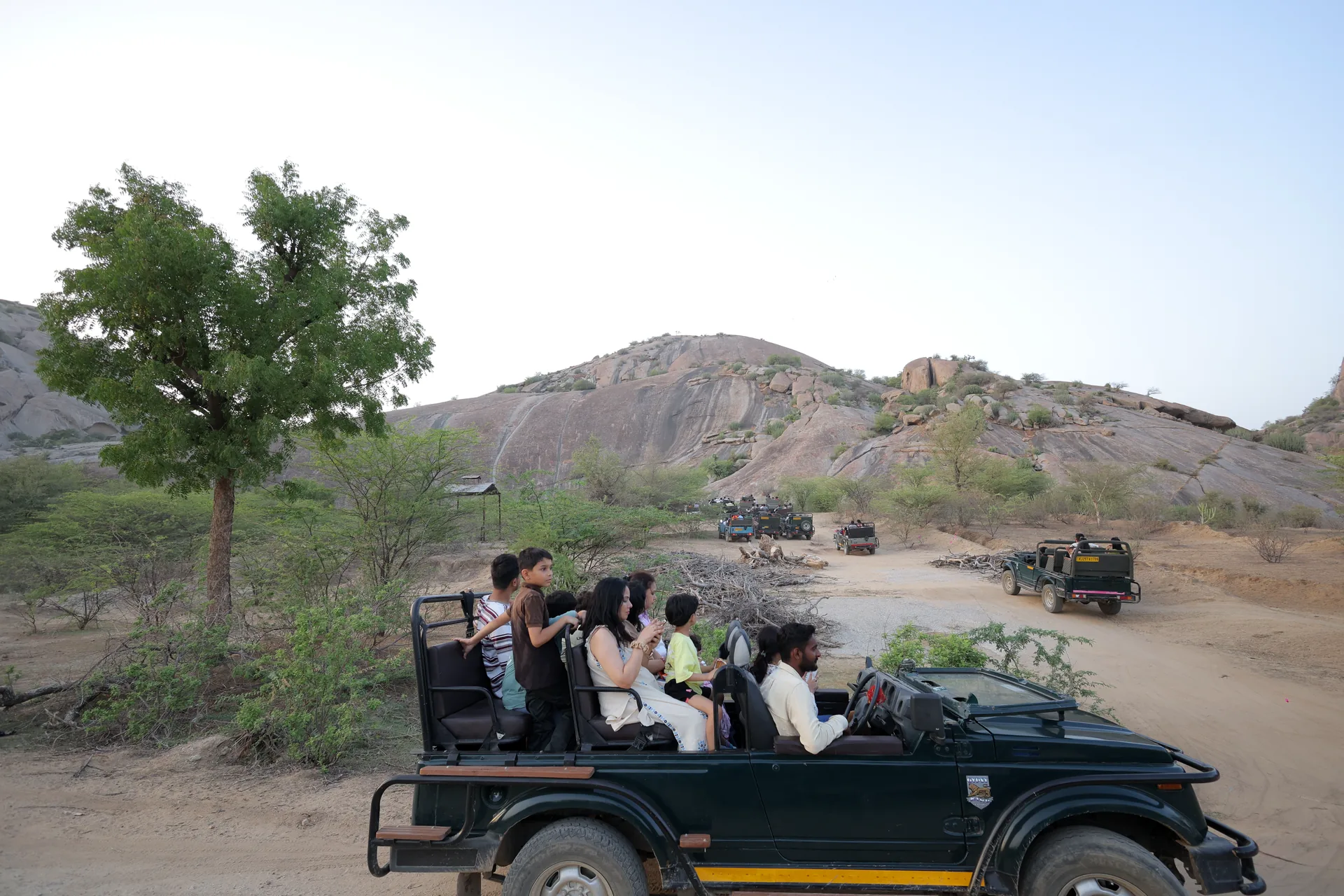
Wear comfortable trousers, a breathable shirt and secure, closed-toe shoes for a Jawai leopard safari. Choose muted colours such as beige, brown, grey or olive, and bring a removable layer suited to the weather. Pack lightly, with your booking details, drinking water and camera essentials within reach.
You do not need expensive safari clothing. Preparing for an open-jeep journey, changing conditions and time spent sitting quietly is more important than buying specialist equipment.
Before leaving, check the reporting instructions for your chosen Jawai Leopard Safari, including the meeting point and whether any transfers or refreshments are included.
Jawai safari packing checklist
Use this list as a practical starting point, then adjust it for your departure and the forecast.
| Item | Why bring it? |
|---|---|
| Comfortable trousers and shirt | For sitting and boarding the jeep |
| Removable jacket or fleece | For cooler conditions in an open vehicle |
| Secure, closed-toe shoes | For a steady footing when boarding |
| Hat and sun protection | For exposed conditions |
| Drinking water | To keep accessible during the outing |
| Booking confirmation | To check reporting and contact details |
| Identification requested by the operator | To meet your booking requirements |
| Charged phone or camera | For photographs and communication |
| Binoculars, if available | For observing wildlife at a distance |
| Small protective bag | To organise belongings and protect electronics |
Check unusual equipment or bulky items with the operator before bringing them. The booking team’s current instructions take priority over a general packing list.
What clothes work well in an open safari jeep?
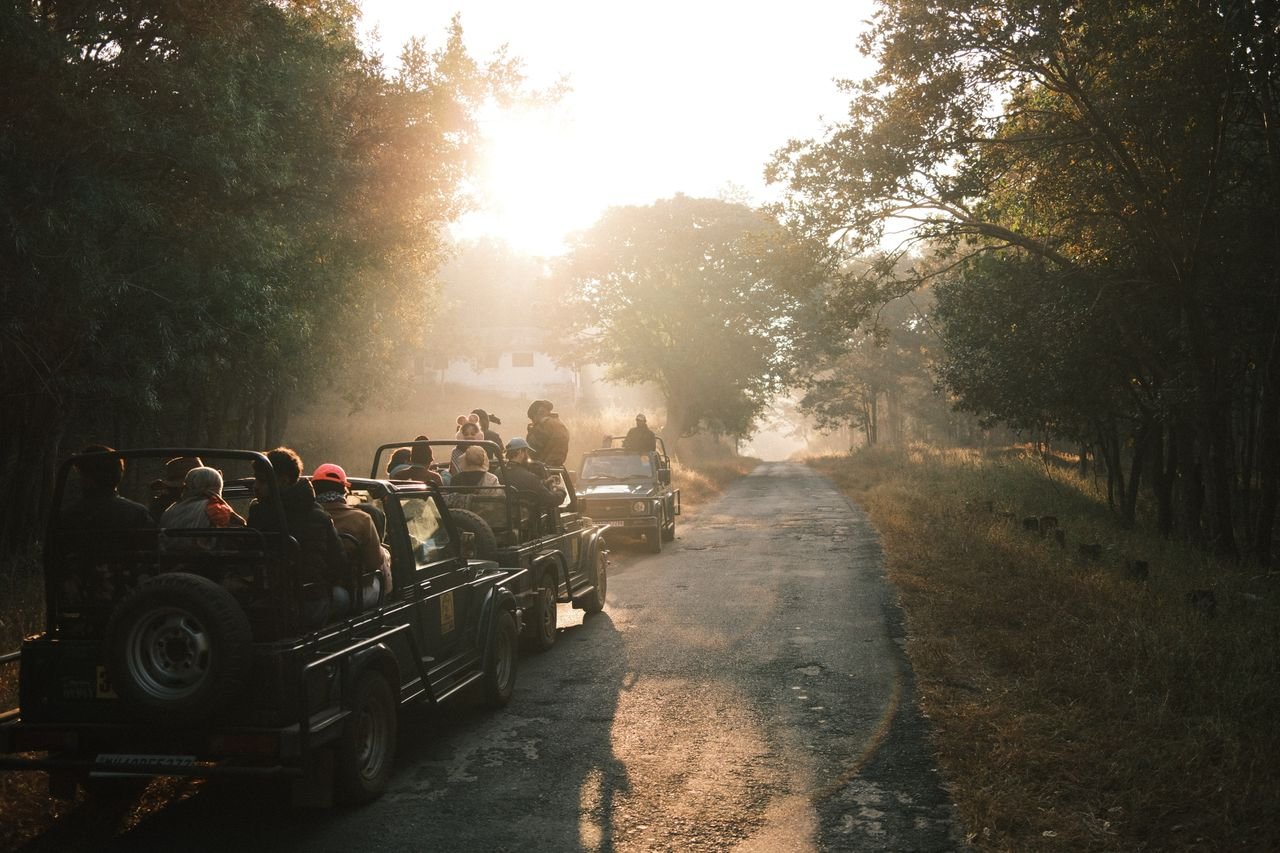
Choose clothes that allow easy movement without feeling tight when seated. Lightweight trousers and a comfortable shirt are a straightforward combination.
Avoid loose accessories that could catch while boarding or blow around during the drive. Secure scarves and choose a hat that stays in place.
Muted colours are a practical choice, but clothing is not a wildlife-viewing technique. Wearing a particular colour will not make a leopard appear or guarantee a closer encounter.
Preparing for a morning departure
Check the forecast and carry an extra layer if cool conditions are expected. An open jeep offers less protection from moving air than an enclosed car.
Keep that layer accessible rather than at the bottom of your bag. If conditions become warmer, you can remove it without having to change your whole outfit.
Preparing for an evening departure
Consider both the temperature when you set off and the conditions expected towards the end of the outing. A light layer may be useful even if the afternoon feels warm.
If you are deciding between departure periods, read our morning vs evening Jawai leopard safari guide.
Preparing for possible rain
Bring compact rain protection if rain is forecast and use a protective cover or bag for electronics.
Ask the operator about any weather-related changes before travelling to the meeting point. Do not assume that a general seasonal description tells you what conditions will be like on your specific date.
Which shoes should you wear?
Comfortable trainers or other secure, closed-toe shoes are a practical option. Choose footwear with grip that makes stepping into and out of the vehicle manageable.
There is no need to buy heavy walking boots solely for a jeep safari. Equally, heels and loose sandals may make boarding unnecessarily awkward.
The safari is not an invitation to explore rocky slopes independently. Leave the vehicle only where your guide explicitly says it is appropriate, and follow instructions about where you can stand or walk.
If boarding height or uneven ground could be difficult for you, discuss this before confirming your booking.
What should you put in your camera bag?
Keep your camera setup manageable. A charged battery, enough storage and a secure strap are a sensible foundation.
If you already own a zoom lens or binoculars, they can help you observe wildlife without expecting the jeep to move closer. You do not need to purchase expensive equipment simply to enjoy the visit.
Consider bringing:
-
A spare battery or suitable power bank.
-
A lens cloth.
-
A protective cover or small bag.
-
A spare memory card, if you use a camera.
-
A secure strap for your equipment.
Ask about large tripods or other bulky accessories in advance. Do not assume there will be space to use them comfortably in the vehicle.
Keep equipment inside the jeep, and avoid leaning out or obstructing another passenger’s view.
Can you photograph a Jawai safari with a phone?
Yes. A phone can capture the landscape, the journey and wildlife that is visible within its camera’s capabilities.
However, a distant leopard may appear small, and heavy digital zoom can reduce image quality. Sometimes the more rewarding choice is to watch through binoculars or simply enjoy the sighting.
A photograph showing an animal within the surrounding landscape can be just as meaningful as a close-up. Never ask the driver to crowd wildlife for a better phone image.
What should you confirm about food and water?
Check the exact inclusions of your selected option. Do not assume that every departure includes refreshments, high tea or a meal.
Carry drinking water according to the operator’s guidance. If you want to bring food, ask beforehand and keep it packed away unless the guide identifies an appropriate place to eat.
Never offer food to wildlife. Keep wrappers and other rubbish with you for proper disposal afterwards.
If you have dietary requirements and your package includes refreshments, share them before the safari and obtain confirmation of what can be provided.
What documents and booking details should you keep ready?
Save your confirmation and the operator’s contact number before leaving your accommodation. Check:
-
Your booked date and departure.
-
The reporting time.
-
The precise meeting point.
-
Any identification requested.
-
Your group size and vehicle arrangement.
-
Whether local pickup or other transport is included.
A local safari booking should not be treated as an automatic transfer package from another city. Confirm those arrangements separately.
Our Jawai leopard safari booking guide explains the booking details and inclusions to review before payment.
How should families and older travellers prepare?
Discuss the actual vehicle and journey with the operator rather than assuming the experience will suit every traveller in the same way.
Ask about boarding assistance, seating, uneven tracks and any other concern relevant to your group. Share children’s ages and explain any mobility requirements before confirming.
For children, prepare for periods of quiet waiting rather than constant animal sightings. Explain that wildlife cannot be called closer and that the guide’s instructions apply throughout the trip.
Keep essential personal items accessible in a small bag. Avoid packing so much that belongings occupy passenger space or make boarding difficult.
What should you leave behind?
Leave unnecessary valuables and large luggage at your accommodation where suitable storage is available.
Try to avoid bringing:
-
Large bags that take up seating or foot space.
-
Speakers or noisy entertainment devices.
-
Loose items that could fall from the vehicle.
-
Equipment you have not checked with the operator.
-
Expectations of a guaranteed leopard photograph.
Bring curiosity and patience instead. A wildlife drive includes searching, observing and waiting, and the experience will not follow a script.
Preparing for more than one safari
If you are booking an evening drive followed by a morning outing, organise your belongings between departures.
Recharge batteries, clear space on your phone, refill water as appropriate and adjust your clothing for the next forecast. Keep your reporting instructions ready so an early start is less rushed.
You do not need a completely different equipment setup for each outing. A small, practical kit that you know how to use is usually easier to manage.
If you are still deciding how many departures to reserve, read our guide to how many safaris to book in Jawai.
Responsible wildlife-viewing habits
Preparation is not only about what is in your bag. Your behaviour matters throughout the outing.
Listen to your tracker, keep conversation quiet and do not attempt to attract an animal’s attention. Avoid asking for a closer approach simply because a photograph looks too distant.
Respect residents and private property when travelling through the wider landscape. Ask before photographing people, and follow local guidance at any permitted stop.
A private jeep does not provide unrestricted access or permission to ignore instructions.
Frequently asked questions
Can I wear jeans on a Jawai safari?
Yes, if they are comfortable for sitting and boarding the vehicle. Breathable trousers may feel more comfortable when warm weather is expected.
Do I need a jacket for Jawai safari?
Check the forecast for your departure. A removable layer is sensible when cool conditions are expected, especially in an open vehicle.
Are binoculars necessary?
They are useful but not essential. Bring your own if you have them, or ask whether they are available rather than assuming they are included.
Should I bring a large camera lens?
Bring equipment you can manage comfortably, and check bulky items with the operator. A large lens is not a requirement for enjoying the safari.
Is high tea included in every Jawai safari?
Do not assume so. Check whether you selected an option that explicitly includes high tea or refreshments.
What is the most important preparation step?
Confirm your meeting point, reporting time and package inclusions. Having the correct arrangements matters more than owning specialist safari clothing.
Get ready for your Jawai safari
Comfortable clothing, secure footwear and a small, organised bag are a good foundation. Check the forecast, confirm your reporting details and leave room for the unpredictability of wildlife viewing.
Explore our Jawai leopard safari options and availability to choose your departure, then follow the instructions supplied for your confirmed booking.