Kumbhalgarh Fort is famous for its enormous 36-kilometre defensive wall, its association with Maharana Pratap, its strategic role in the history of Mewar, its dramatic position in the Aravalli Hills and its inclusion in the UNESCO World Heritage-listed Hill Forts of Rajasthan.
Built in the 15th century under the rule of Rana Kumbha, Kumbhalgarh became one of the most important strongholds of the Kingdom of Mewar.
Unlike many forts that are primarily known for palaces or royal residences, Kumbhalgarh is remembered above all for its scale, defensive architecture and mountainous setting.
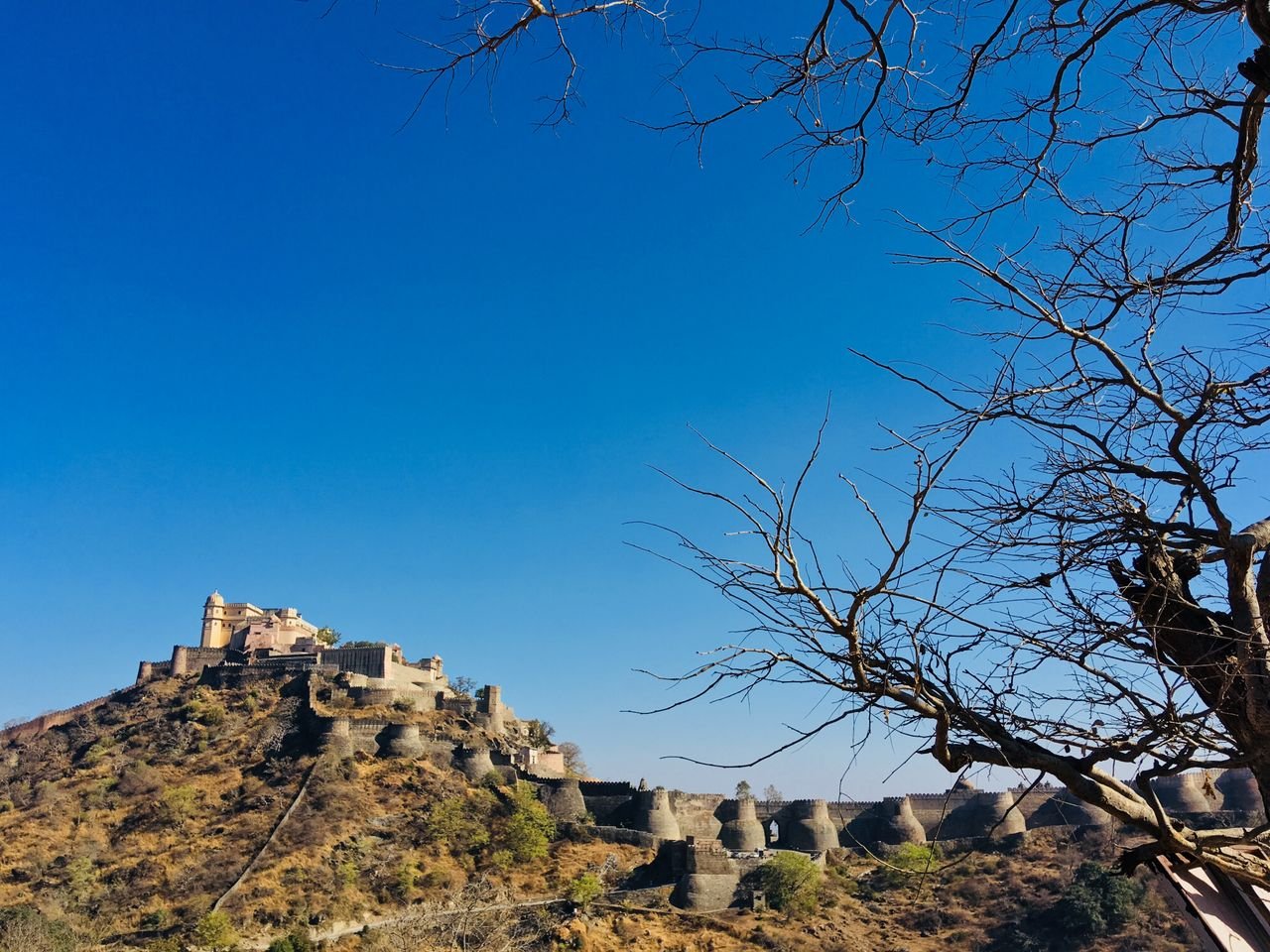
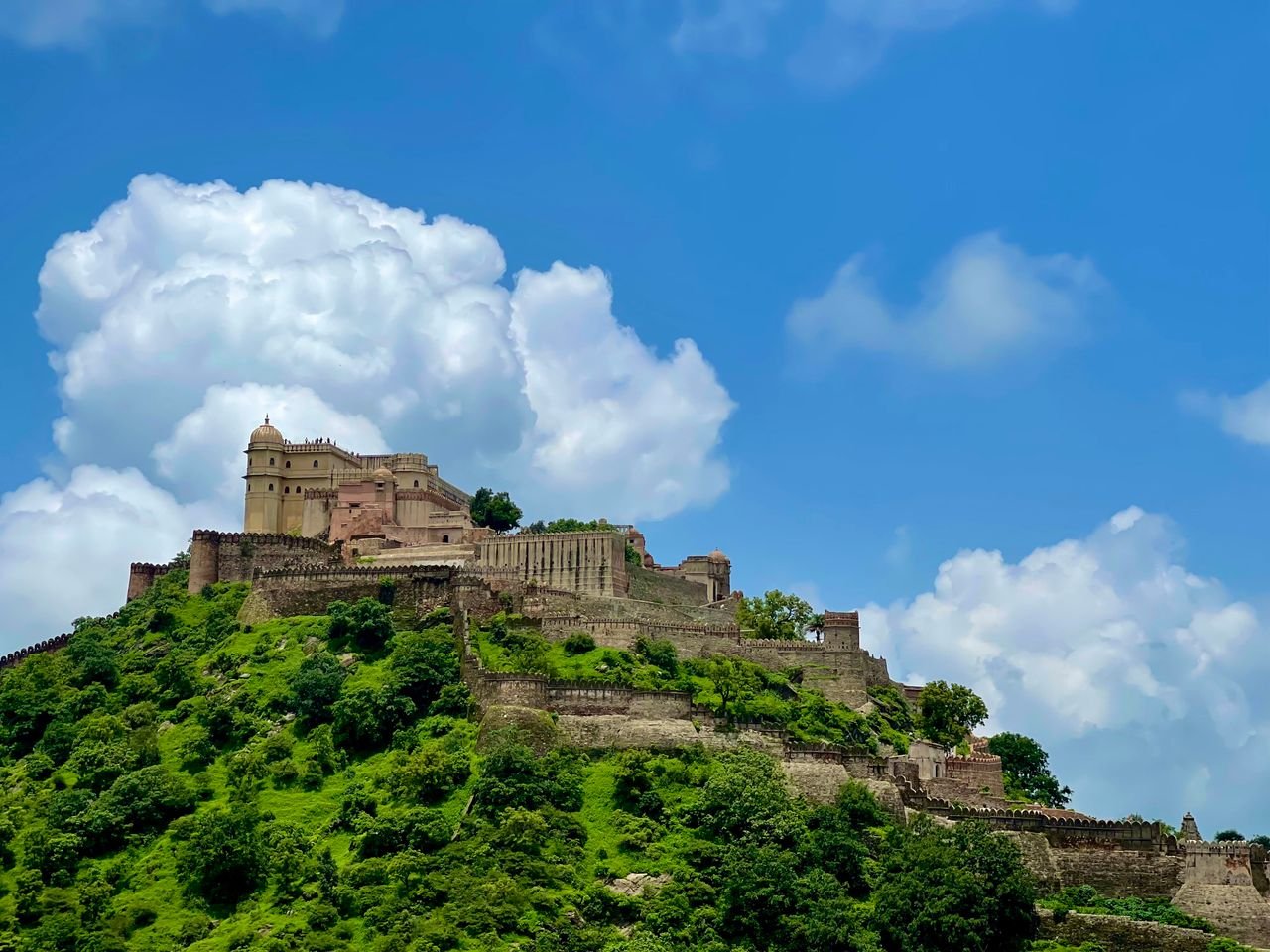
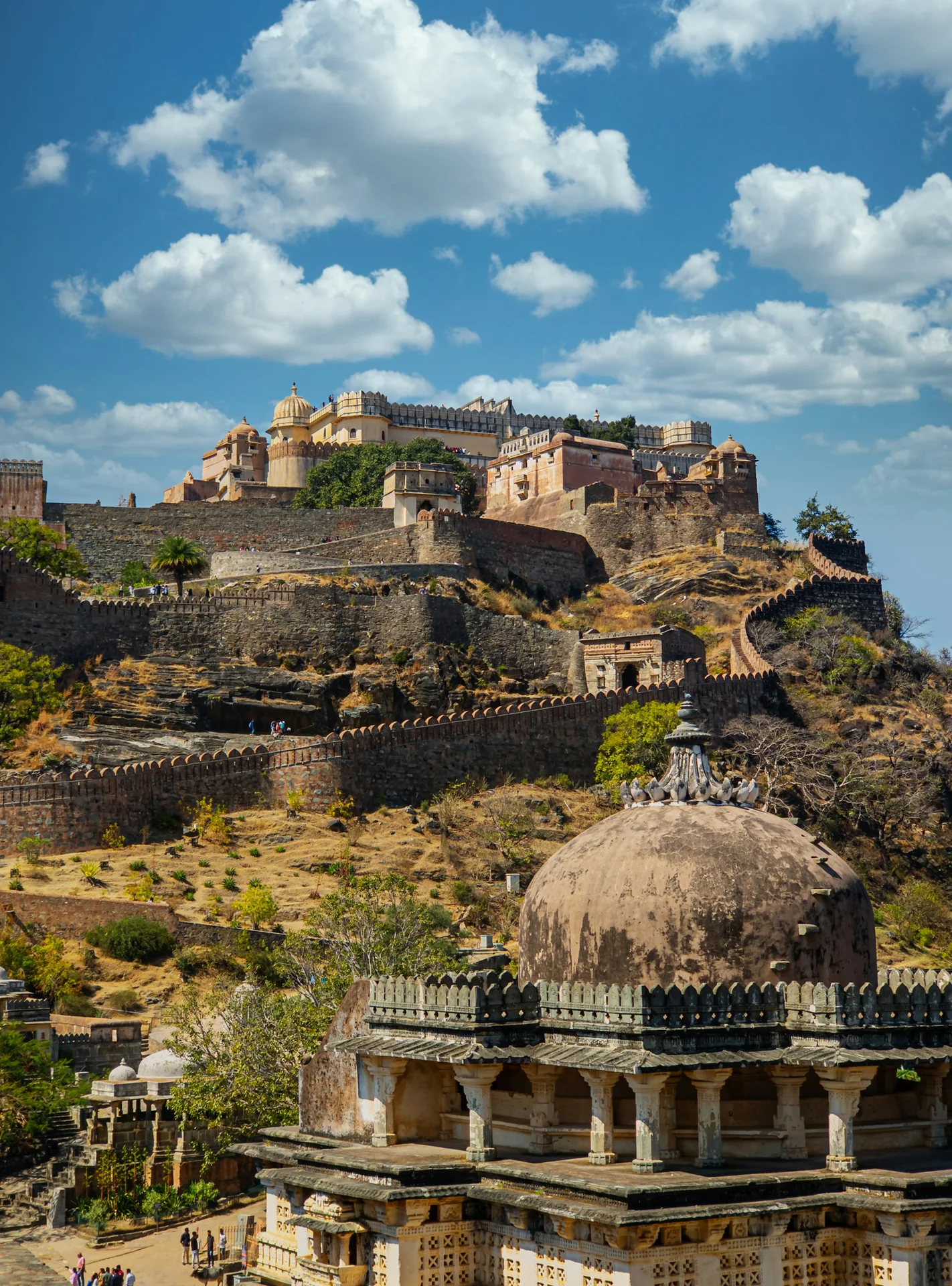
The fort rises above the surrounding Aravalli landscape, with massive walls, gateways, temples, palaces and viewpoints spread across an extensive fortified complex.
Today, Kumbhalgarh is one of the most rewarding heritage excursions from Udaipur and is frequently combined with Ranakpur Jain Temple in a full-day trip.
Travellers planning the complete journey can also read our Kumbhalgarh and Ranakpur Day Trip from Udaipur: Complete Guide.
Quick Answer: What Makes Kumbhalgarh Fort Famous?
Kumbhalgarh Fort is particularly famous for seven reasons:
- Its approximately 36-kilometre-long defensive wall
- Its association with Maharana Pratap
- Its construction under Rana Kumbha
- Its importance as a major Mewar stronghold
- Its UNESCO World Heritage status
- Its temples, gateways and Badal Mahal
- Its panoramic location in the Aravalli Hills
These features make Kumbhalgarh very different from Rajasthan's palace-dominated heritage sites.
It is a place where geography, military engineering and royal history come together.
1. Kumbhalgarh Is Famous for Its 36-Kilometre Fort Wall
The feature most commonly associated with Kumbhalgarh is its enormous defensive wall.
According to Rajasthan Tourism, the wall extends for approximately 36 kilometres through the hills surrounding the fort. Rajasthan Tourism
The wall follows the natural contours of the Aravalli landscape rather than running across flat ground.
From several viewpoints inside Kumbhalgarh, visitors can see sections of the fortifications disappearing over distant ridges.
This scale helps explain why Kumbhalgarh was such a formidable defensive position.
Is Kumbhalgarh's Wall Really the Second Longest Wall in the World?
You will often hear Kumbhalgarh described as having the "second-longest wall in the world after the Great Wall of China."
This description is extremely common in tourism literature, including Indian government tourism material, but it should be treated as a popular tourism comparison rather than a formal global architectural ranking.
What can be stated confidently is that Kumbhalgarh possesses an extraordinarily extensive fortified wall measuring around 36 kilometres, making it one of the most impressive historic fortification systems in India. Rajasthan Tourism
For visitors, the important point is not the ranking but the sheer scale of the structure.
Standing on the ramparts and seeing the wall continue across the Aravalli ridges gives a much better understanding of Kumbhalgarh's size than photographs alone.
2. Kumbhalgarh Fort Is the Birthplace of Maharana Pratap
Another major reason Kumbhalgarh is famous is its connection with Maharana Pratap, one of the most celebrated rulers of Mewar.
Rajasthan Tourism identifies Kumbhalgarh as the birthplace of Maharana Pratap. Rajasthan Tourism
This gives the fort enormous historical and cultural significance in Rajasthan.
Maharana Pratap later became widely remembered for his resistance to Mughal expansion and for his leadership of Mewar during the 16th century.
His association with Kumbhalgarh means that the fort is not simply an architectural monument; it is also closely linked with one of Rajasthan's most recognisable historical figures.
Why Is Maharana Pratap Important in Rajasthan's History?
Maharana Pratap is remembered as a ruler who defended the independence of Mewar during a period when much of northern India was coming under Mughal influence.
His military struggles, particularly the Battle of Haldighati, have made him an enduring figure in Rajasthan's historical memory.
For travellers who later visit Haldighati, Chittorgarh or Udaipur, Kumbhalgarh provides useful context for understanding the broader story of Mewar.
3. Kumbhalgarh Was Built by Rana Kumbha
Kumbhalgarh Fort was built during the 15th century under Rana Kumbha, one of the most important rulers of Mewar. Rajasthan Tourism
Rana Kumbha ruled during a period of considerable architectural and military development.
The fort was designed as a powerful defensive stronghold in the Aravalli Hills.
Its elevated position, fortified gateways and extensive walls made approaching armies considerably more vulnerable than defenders positioned inside the fort.
UNESCO also notes that Kumbhalgarh's design is associated with an architect named Mandan, who was connected with Rana Kumbha's court. UNESCO World Heritage Centre
4. Kumbhalgarh Was One of Mewar's Most Important Fortresses
Kumbhalgarh's fame is not based only on its size.
It also played a strategically important role in the Kingdom of Mewar.
Rajasthan Tourism describes it as the second most important citadel of Mewar after Chittorgarh. Rajasthan Tourism
Its remote and mountainous position made it valuable during periods of political instability and warfare.
The fort served as a place of refuge for Mewar's rulers when conditions elsewhere became dangerous.
This helps explain why Kumbhalgarh was built as such a large, self-contained defensive complex rather than merely as a royal residence.
5. Kumbhalgarh Is a UNESCO World Heritage Site
Kumbhalgarh Fort forms part of the Hill Forts of Rajasthan, which were inscribed on the UNESCO World Heritage List in 2013. UNESCO World Heritage Centre
The UNESCO property consists of six forts:
- Chittorgarh Fort
- Kumbhalgarh Fort
- Ranthambore Fort
- Gagron Fort
- Amber Fort
- Jaisalmer Fort
Together, these forts demonstrate how Rajput rulers adapted fort architecture to Rajasthan's dramatically different landscapes.
Some were built into hills, others were protected by forests, rivers or desert terrain.
Kumbhalgarh is one of the clearest examples of a hill fort designed around the natural defensive advantages of mountainous terrain.
Why Did UNESCO Recognise the Hill Forts of Rajasthan?
UNESCO highlights the way these forts represent the power and culture of Rajput states that flourished between approximately the 8th and 18th centuries.
The complexes were not simply defensive structures.
They could include:
- Palaces
- Temples
- Settlements
- Water systems
- Trading areas
- Royal and cultural spaces
This makes Kumbhalgarh important not just as a military fort but as part of a larger historic landscape.
6. Kumbhalgarh Is Famous for Its Strategic Aravalli Location
The location of Kumbhalgarh is central to its character.
The fort stands among the Aravalli Hills, surrounded by rugged terrain that historically made access difficult.
Instead of constructing a fort on open ground and relying entirely on walls, Kumbhalgarh's builders used the mountains themselves as part of its defensive system.
The fortifications follow ridges and steep slopes, creating multiple layers of protection.
This interaction between architecture and landscape is one of the most impressive aspects of visiting Kumbhalgarh in person.
7. The Views from Kumbhalgarh Are Spectacular
Kumbhalgarh is also famous for its panoramic views.
From the higher sections of the fort, visitors can look across:
- Aravalli ridges
- Forested valleys
- Sections of the fort walls
- Rural settlements
- Distant hills
Rajasthan Tourism specifically highlights the fort's elevated views across the surrounding landscape. Rajasthan Tourism
The scenery changes noticeably with the seasons.
During the drier months, the landscape can appear rugged and golden.
During and after the monsoon, the hills can become dramatically greener.
If the landscape and weather are important to you, read our Best Time to Visit Kumbhalgarh and Ranakpur from Udaipur before planning your trip.
8. Badal Mahal Is One of Kumbhalgarh's Main Attractions
One of the most memorable structures inside the fort is Badal Mahal, commonly translated as the Palace of Clouds.
It stands in an elevated part of the complex and is among Kumbhalgarh's most recognisable palace structures.
Reaching Badal Mahal requires some uphill walking, but the location rewards visitors with wide views over the surrounding countryside.
The palace is particularly interesting because it provides a contrast with the fort's massive military architecture.
Instead of only thick defensive walls and gates, visitors encounter royal residential spaces high above the Aravalli landscape.
9. Kumbhalgarh Contains Numerous Temples
Many first-time visitors expect Kumbhalgarh to contain only walls and palace ruins.
In reality, the fortified complex also contains numerous historic temples.
Both Hindu and Jain religious structures form part of the cultural landscape within the fort.
This is important because historic Rajasthan forts often functioned as complete settlements rather than purely military installations.
Religious buildings, royal residences, water systems and defensive architecture existed together inside the protected area.
Walking through Kumbhalgarh therefore reveals several layers of history rather than a single monument.
10. Kumbhalgarh Is an Excellent Example of Rajput Defensive Architecture
The fort was designed to make invasion exceptionally difficult.
Its defensive features include:
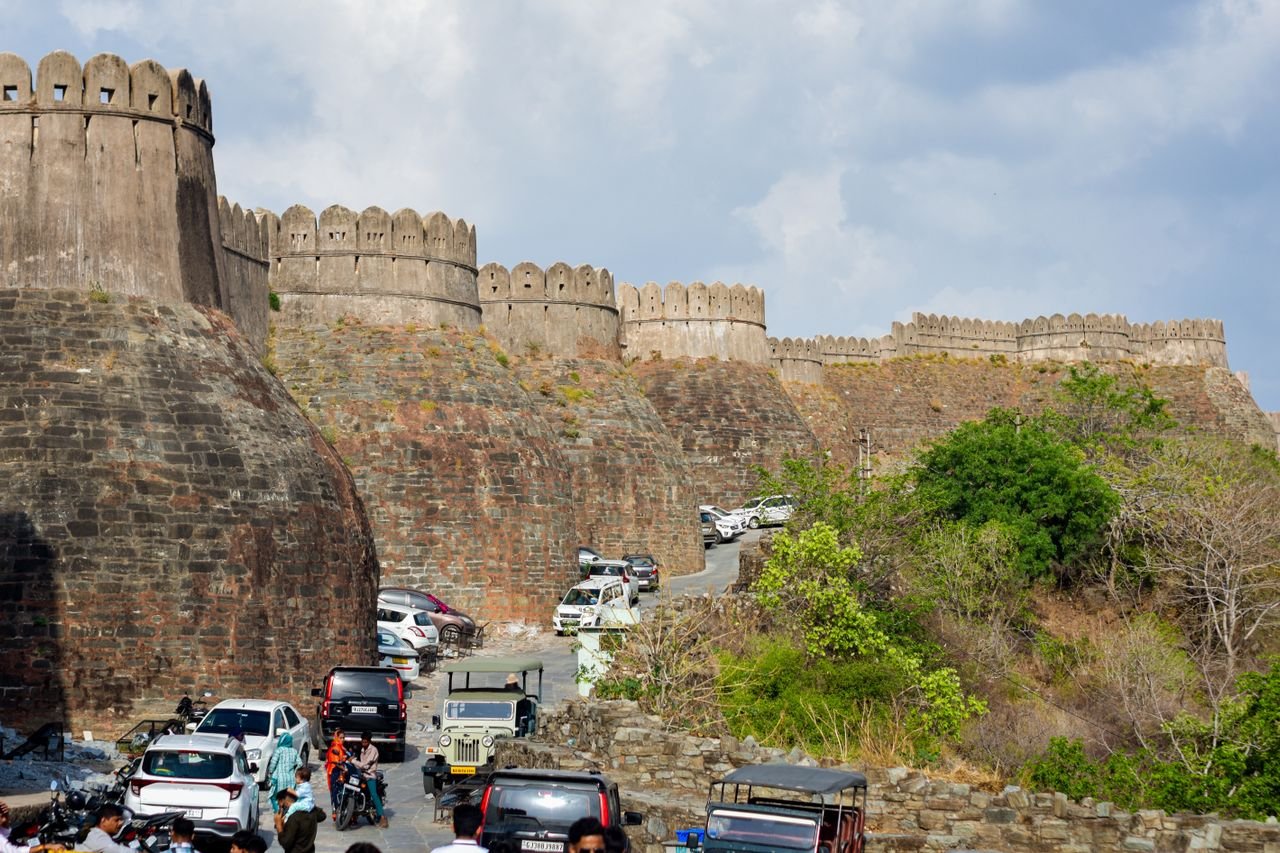
- Massive walls
- Bastions
- Hilltop positioning
- Multiple gateways
- Steep approach roads
- Elevated observation points
- Natural mountain defences
The approach itself helps visitors understand the strategy.
As the road climbs towards Kumbhalgarh, the surrounding terrain becomes increasingly mountainous.
Attackers approaching such a fort would have faced steep slopes, restricted movement and defenders positioned above them.
This combination of engineering and geography is one of the principal reasons Kumbhalgarh remains so impressive today.
Was Kumbhalgarh Fort Ever Captured?
Kumbhalgarh developed a reputation as an exceptionally difficult fortress to conquer.
Rajasthan Tourism records that its defences were breached only once, when combined forces attacked the fort and a shortage of drinking water contributed to its fall. Rajasthan Tourism
This history reinforced Kumbhalgarh's reputation as one of Mewar's strongest defensive positions.
Its strength came from several factors working together:
- Mountain terrain
- Strong fortifications
- Multiple defensive barriers
- Difficult access
- Extensive internal infrastructure
Why Was Kumbhalgarh So Difficult to Attack?
The fort's geography gave defenders a major advantage.
Armies approaching Kumbhalgarh had to travel through difficult terrain before even reaching the main fortifications.
Once attackers arrived, they faced walls, gates and elevated defensive positions.
The fort also occupied a position that allowed defenders to observe the surrounding landscape from considerable distances.
In medieval warfare, this combination could make a prolonged siege extremely difficult.
How Old Is Kumbhalgarh Fort?
The present fort is primarily associated with Rana Kumbha and the 15th century. Rajasthan Tourism
That makes the main fortifications more than five centuries old.
Later rulers continued to use and modify parts of the complex.
Rajasthan Tourism notes that Maharana Fateh Singh carried out renovations during the 19th century. Rajasthan Tourism
As a result, visitors today see architecture representing more than one historical phase.
What Should You See Inside Kumbhalgarh Fort?
If you are visiting for the first time, prioritise the following.
The Fort Walls
Spend some time observing how the walls extend across the surrounding hills.
The scale is one of the defining experiences of Kumbhalgarh.
Badal Mahal
Walk towards the upper palace complex if your mobility allows.
The views are among the best inside the fort.
Main Gateways
Pay attention to the fortified entrances and how the road approaches them.
They help explain the fort's defensive design.
Hindu and Jain Temples
Explore some of the historic religious structures located within the complex.
Panoramic Viewpoints
Do not rush through the fort.
Several elevated areas provide sweeping views of the Aravalli Hills and fortifications.
How Much Time Do You Need at Kumbhalgarh Fort?
Most first-time visitors should allow approximately 2–3 hours.
That gives enough time to:
- Enter the main fort complex
- Walk through important gateways
- Explore principal structures
- Visit Badal Mahal if desired
- See some temples
- Stop at viewpoints
- Take photographs
Travellers deeply interested in architecture or history could easily spend longer.
However, if you are combining Kumbhalgarh with Ranakpur Jain Temple in the same day, around two to three hours usually creates a practical balance.
Is Kumbhalgarh Fort Worth Visiting from Udaipur?
Yes — especially for travellers interested in history, architecture, photography or Rajasthan's fort heritage.
Udaipur is famous primarily for its lakes and palaces.
Kumbhalgarh offers a very different experience.
Instead of urban palaces overlooking Lake Pichola, visitors encounter:
- Mountain landscapes
- Massive fortifications
- Rajput military history
- Historic temples
- Panoramic viewpoints
- Rural Rajasthan
This contrast makes Kumbhalgarh one of the most worthwhile full-day excursions from Udaipur.
How Far Is Kumbhalgarh from Udaipur?
Kumbhalgarh is roughly 85 kilometres from Udaipur, although the exact distance depends on your starting point and the road used.
The journey normally takes considerably longer than the distance might suggest because the route eventually enters winding sections of the Aravalli Hills.
Travellers should plan around two to two-and-a-half hours each way between Udaipur and Kumbhalgarh, depending on traffic and road conditions.
If you are also visiting Ranakpur, read our detailed Udaipur to Kumbhalgarh and Ranakpur Distance, Route and Travel Time guide.
Can You Visit Kumbhalgarh and Ranakpur Together?
Yes.
Kumbhalgarh Fort and Ranakpur Jain Temple make an excellent combination for a full-day excursion from Udaipur.
The two attractions provide completely different experiences.
Kumbhalgarh offers:
- Fort architecture
- Rajput history
- Mountain scenery
- Defensive walls
Ranakpur offers:
- Jain heritage
- Marble architecture
- Intricate carvings
- A peaceful temple atmosphere
A common route is:
Udaipur → Kumbhalgarh → Ranakpur → Udaipur
For most travellers, this is more efficient than making separate day trips.
What Is the Best Time to Visit Kumbhalgarh?
For comfortable sightseeing, October to March is generally the best period.
These months typically provide better conditions for walking around the fort.
Winter mornings can be cool, while afternoons are usually pleasant for exploring outdoor monuments.
The monsoon period offers a different experience.
Rain can make travel less predictable, but the surrounding Aravalli Hills often become much greener.
Summer visits are possible, although Kumbhalgarh contains exposed walking areas and can become very hot.
For a month-by-month breakdown, see our Best Time to Visit Kumbhalgarh and Ranakpur from Udaipur.
Is Kumbhalgarh Good for Photography?
Yes.
Kumbhalgarh is particularly suitable for:
- Landscape photography
- Architecture photography
- Fort-wall perspectives
- Panoramic hill views
- Historic gateways
- Palace details
The visual character of the fort changes dramatically according to the season.
Monsoon and post-monsoon months can provide greener backgrounds, while winter often offers comfortable conditions for spending longer outdoors.
Early and late daylight can create attractive shadows across the fort walls and mountain landscape.
Is Kumbhalgarh Suitable for Families?
Yes, although families should be prepared for walking.
The fort contains:
- Slopes
- Steps
- Uneven surfaces
- Uphill sections
Children who enjoy forts and history will generally find the scale of Kumbhalgarh interesting.
Carry water, comfortable shoes, hats and sunscreen.
Families should also avoid trying to see every section of the fort if younger children become tired.
Is Kumbhalgarh Suitable for Older Travellers?
Many older travellers can visit Kumbhalgarh comfortably, but the amount of walking should be adjusted according to mobility.
It is not necessary to climb to every upper section to experience the fort.
Visitors can concentrate on:
- Main gateways
- Lower historic structures
- Accessible viewpoints
- Selected temples
Anyone with mobility concerns should avoid rushing and allow extra time.
What Should You Wear at Kumbhalgarh Fort?
Wear practical clothing suitable for walking outdoors.
Recommended items include:
- Comfortable walking shoes
- Breathable clothing
- Sunglasses
- Sunscreen
- Hat or cap
- Light jacket during winter
Avoid footwear with poor grip because some sections contain uneven stone surfaces and slopes.
Should You Hire a Guide at Kumbhalgarh?
A guide is not essential, but it can greatly improve the experience for visitors interested in history.
Without context, Kumbhalgarh can appear to be a collection of walls, gates, ruins and temples.
A knowledgeable guide can help explain:
- Rana Kumbha
- Maharana Pratap
- The Kingdom of Mewar
- Defensive architecture
- Important gates
- Palace structures
- Religious buildings
For first-time international visitors, this context can make the fort much easier to understand.
How to Visit Kumbhalgarh from Udaipur
The most convenient option for most tourists is a private car with driver.
This allows you to:
- Leave directly from your Udaipur hotel
- Start early
- Travel comfortably through the Aravallis
- Spend your preferred amount of time at the fort
- Continue to Ranakpur if desired
- Return to Udaipur the same evening
Public transport exists in the wider region, but it is generally less convenient for travellers trying to combine sightseeing efficiently.
Visit Kumbhalgarh and Ranakpur from Udaipur
If you want to experience Kumbhalgarh as part of a comfortable full-day excursion, Safari Rajasthan offers a Kumbhalgarh and Ranakpur Day Trip from Udaipur.
The tour combines Kumbhalgarh Fort with Ranakpur Jain Temple and is designed as a full-day journey from Udaipur.
Depending on the option selected on the booking page, travellers can arrange private transportation and additional inclusions in advance.
This is particularly useful for travellers who want to see both heritage attractions without arranging separate transport during their stay.
Frequently Asked Questions About Kumbhalgarh Fort
Why is Kumbhalgarh Fort famous?
Kumbhalgarh Fort is famous for its approximately 36-kilometre defensive wall, association with Maharana Pratap, 15th-century Mewar history, massive hill fortifications and UNESCO World Heritage status.
Who built Kumbhalgarh Fort?
Kumbhalgarh Fort was built in the 15th century under Rana Kumbha, ruler of Mewar.
Was Maharana Pratap born at Kumbhalgarh?
Yes. Rajasthan Tourism identifies Kumbhalgarh Fort as the birthplace of Maharana Pratap.
Is Kumbhalgarh a UNESCO World Heritage Site?
Yes. Kumbhalgarh is one of six forts forming the UNESCO World Heritage property known as the Hill Forts of Rajasthan, inscribed in 2013.
How long is the Kumbhalgarh Fort wall?
Rajasthan Tourism states that the defensive wall extends for approximately 36 kilometres.
Is Kumbhalgarh's wall really the second longest in the world?
Kumbhalgarh is frequently promoted as having the second-longest continuous wall after the Great Wall of China. Rather than relying on the ranking itself, travellers can confidently regard its approximately 36-kilometre fortification as one of India's most impressive historic defensive walls.
What is the most famous place inside Kumbhalgarh Fort?
The fort walls and Badal Mahal are among its best-known attractions. The elevated palace area also provides excellent views of the surrounding Aravalli Hills.
How much time is required to visit Kumbhalgarh?
Most visitors should allow around 2–3 hours to explore the principal parts of the fort.
How far is Kumbhalgarh from Udaipur?
Kumbhalgarh is roughly 85 kilometres from Udaipur, with the drive generally taking around two to two-and-a-half hours depending on traffic and road conditions.
Can I visit Kumbhalgarh and Ranakpur in one day?
Yes. Kumbhalgarh Fort and Ranakpur Jain Temple can comfortably be combined into a full-day trip from Udaipur with an early start.
Is Kumbhalgarh worth visiting?
Yes. Kumbhalgarh is particularly worthwhile for travellers interested in Rajput history, fort architecture, Maharana Pratap, UNESCO heritage and panoramic Aravalli landscapes.
What is the best month to visit Kumbhalgarh?
November through February usually provides some of the most comfortable sightseeing weather, although October and March are also good months.
Final Answer: Why Is Kumbhalgarh Fort So Famous?
Kumbhalgarh Fort is famous because very few heritage sites in Rajasthan combine military engineering, royal history and dramatic mountain scenery on such a large scale.
Its roughly 36-kilometre defensive wall immediately sets it apart, but the fort's importance goes much deeper.
It was built under Rana Kumbha, served as one of Mewar's major strongholds, is associated with the birthplace of Maharana Pratap and today forms part of the UNESCO-listed Hill Forts of Rajasthan.
Its gateways, temples, Badal Mahal, fortified walls and sweeping Aravalli views make Kumbhalgarh much more than a quick photo stop.
For travellers staying in Udaipur, it is also conveniently combined with Ranakpur Jain Temple.
If you are planning the journey, read our complete Kumbhalgarh and Ranakpur day-trip guide or view the Kumbhalgarh and Ranakpur Day Trip from Udaipur to see the available tour options.